Dancing Robots in China: What Physical AI Means for Executives
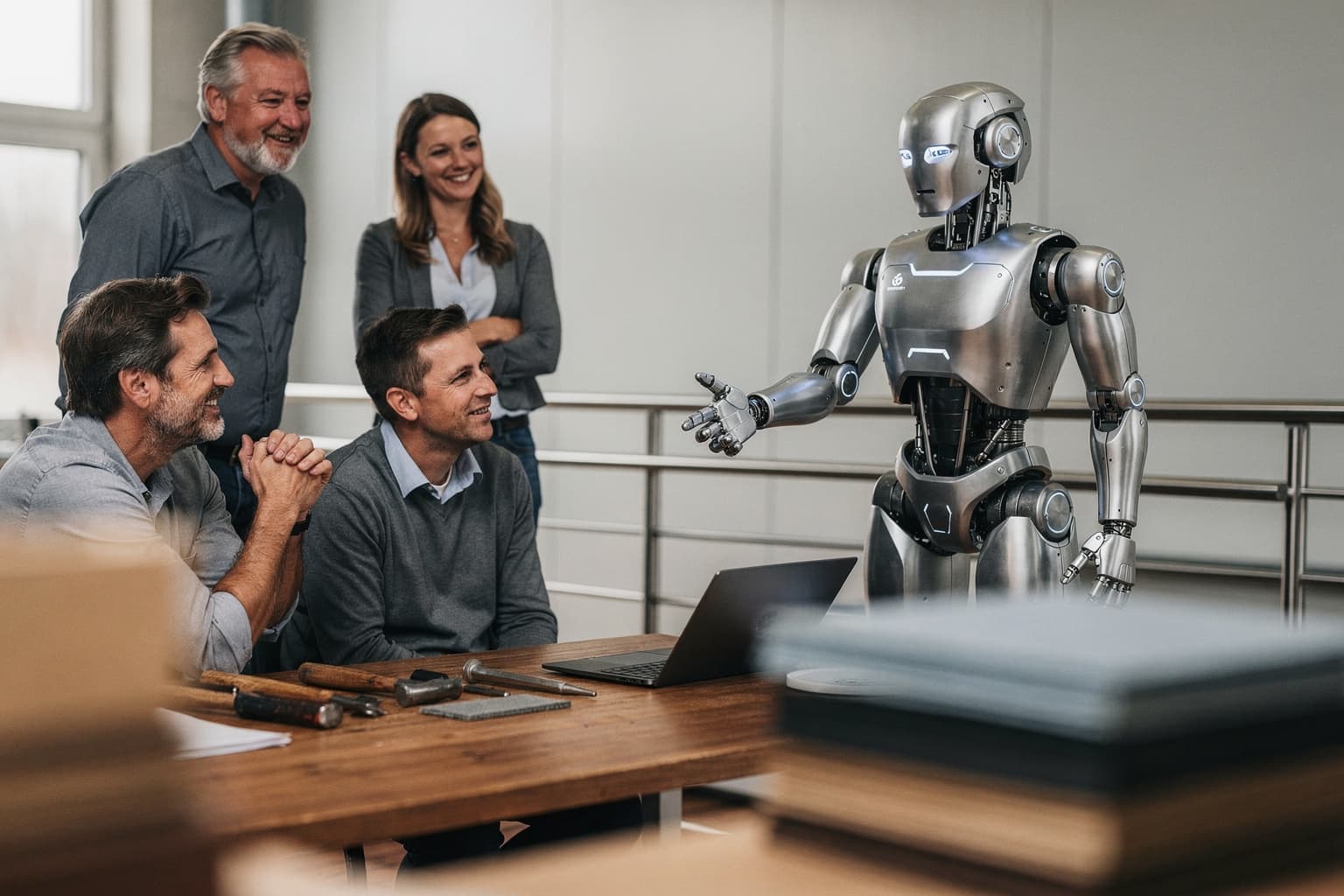
In short
Humanoid robots like the Unitree G1 dance in perfect sync before 18,000 spectators in China, starting at roughly $13,500. The spectacle proves mature Physical AI hardware — but not a finished business case: for Swiss companies, the real value lies not on stage but in logistics, production and hospitality.
The Show in Chengdu and Nantong: What Actually Happened
In December 2025, several Unitree G1 robots danced at Wang Leehom's concert in Chengdu in front of roughly 18,000 spectators. They performed synchronized choreography, including Webster flips, with balance and timing that looked strikingly human. Four months later, in April 2026, China Mobile deployed humanoid robots dressed in leather and silk outfits at the Nantong Jianghai tourism festival — staged as a blend of "technology feel and cultural flavour," framed by 5G branding.
18,000
spectators watched the synchronized robot choreography live in Chengdu
The Technology Behind the Show: What a Unitree G1 Can Actually Do
The Unitree G1 is not a stage trick — it's a real production model. Depending on configuration, it has 23 to 43 degrees of freedom, weighs around 35 kilograms at 127 centimetres tall, and generates a maximum knee torque of 90 to 120 newton-metres. Battery life is roughly two hours — enough for a stage performance, but a real constraint for an eight-hour production shift.
- Base version: from roughly $13,500
- EDU Ultimate variant with dexterous hands: up to roughly $73,900
- 23-43 degrees of freedom depending on configuration
- Weight 35 kg, height 127 cm
- Battery life approx. 2 hours
Stage versus Shop Floor: Two Different Robotics Worlds
A choreographed flip in front of an audience and a reliable grip in a logistics warehouse are two different disciplines. The stage show proves smooth motion control and balance algorithms; the shop floor demands endurance, precision under load, and integration into existing processes — a distinction that becomes clear once robots move from demonstration into daily production use.
Show ≠ Production-Ready
A robot that dances on stage has proven mature motion control. That's an important building block for Physical AI — but it says nothing about reliability, maintenance effort, or integration into daily operations.
The Robotics Tsunami Switzerland Is Underestimating
The choreography in Chengdu is a symptom of a larger trend. China now has roughly 1,000 industrial robots per 10,000 employees, compared to roughly 500 in Europe — a gap examined in the robotics tsunami between China and Europe. This gap won't close through a single concert performance, but it shows the speed at which robotics hardware and software are scaling in China, while many European pilot projects remain stuck in testing.
Where Physical AI Already Delivers Real Business Value
The economically relevant part of Physical AI rarely happens on stage. In hospitality, for instance, robots already handle repetitive, clearly defined tasks such as cleaning spa areas — an application described in robotics in luxury hospitality. Logistics, cleaning, inspection and simple assembly are the areas where investment pays off today — not because they look spectacular, but because they are predictable, repeatable and measurable.
- Logistics: picking, packing, material transport
- Hospitality: cleaning, simple service tasks
- Production: repetitive assembly and inspection steps
- Security: patrols and condition monitoring
The First Step for Swiss Decision-Makers
The decisive question isn't "Can robots dance?" but "Which task in our operation is repetitive, predictable, and ready for Physical AI today?" That answer differs from company to company — and that's exactly where the real work begins: prioritising the use case, calculating the economics, and defining the pilot scope.
Next Step
Before investing in hardware, it's worth doing a structured assessment: which processes can be robotised, and which business case pays off within a short payback period? That's a conversation, not a purchase.
Frequently asked questions
- Can China Mobile's dancing robots also be used for industrial tasks?
- The Unitree G1 models shown are primarily optimised for demonstrations and choreographed movement sequences. Production tasks such as gripping, packing, or transport require different configurations and additional integration work, as shown by production-ready systems in other deployments.
- How much does a humanoid robot like the Unitree G1 cost?
- Prices range from roughly $13,500 for the base version to roughly $73,900 for the EDU Ultimate variant with dexterous hands. Integration, maintenance, and operating costs come on top, varying by use case.
- How long does a Unitree G1 run on a single charge?
- Battery life is roughly two hours. That's sufficient for stage performances or short deployments, but a real constraint for continuous shift-based production work that needs to be factored into any operating concept.
- Why is China ahead of Europe in industrial robots?
- According to assessments of the global robotics trend, China now has roughly 1,000 industrial robots per 10,000 employees, compared to roughly 500 in Europe. This reflects faster scaling of pilot projects into productive applications.
- Where should Swiss companies start with Physical AI?
- A sensible starting point is clearly defined, repetitive tasks with measurable value — such as logistics, cleaning, or inspection. A spectacular show performance is not a useful benchmark for that decision.
Sources
- Leehom's Chengdu Concert Brings Robot Dancers to the Stage
- Elon Musk Shares Video of Unitree G1 Humanoid Robots Pulling Off Backflips at Concert
- Humanoid robots take centre stage at China pop concert
- China Mobile: Humanoid Robots at Nantong Jianghai Tourism Festival (April 2026)
- Unitree G1 Price 2026: From $13,500, EDU Cost & Full Specs
- Unitree G1 Parameter
- Warum KI-Pilotprojekte 2026 sterben – Robotik-Tsunami China vs. Europa

Chris Jon Graf · AI Strategist & CEO
For over 15 years, Chris Jon Graf has built productive Swiss software platforms and advised executive teams on the strategic deployment of artificial intelligence. Would you like to evaluate this topic for your company?